

130+ designs, 6 sizes & 20 finishes | Designer, Modern & Wabi-Sabi
Ceramic Pendant Lights & Hanging Light fixtures
Handmade Ceramic Pendant Lighting







All About Ceramic Lights
How to Choose the Right Pendant Light Fixture
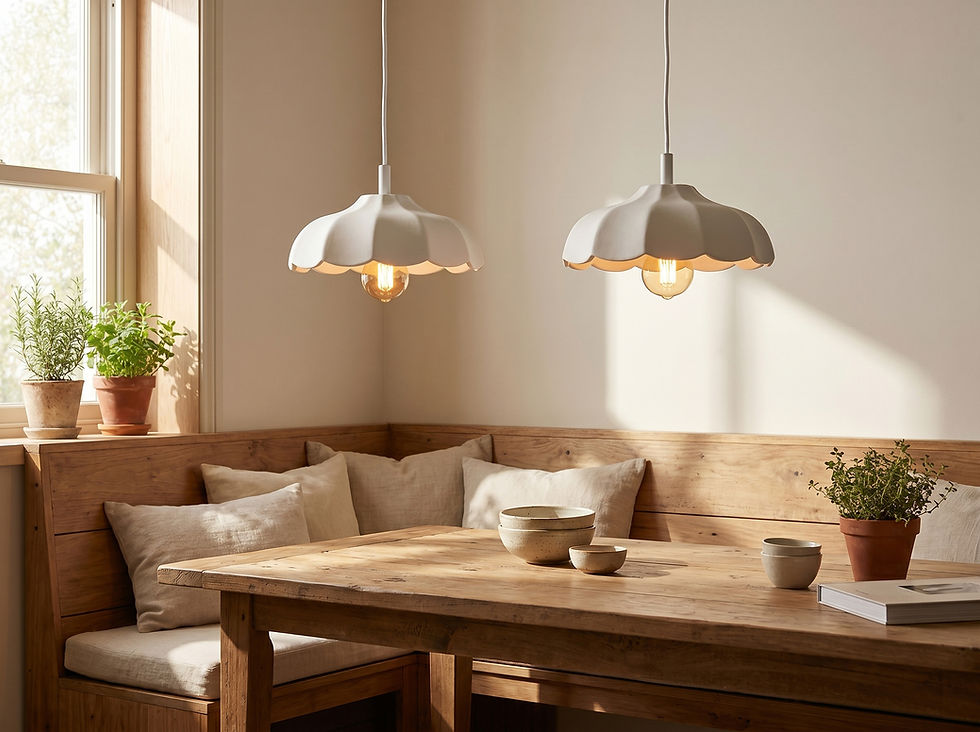
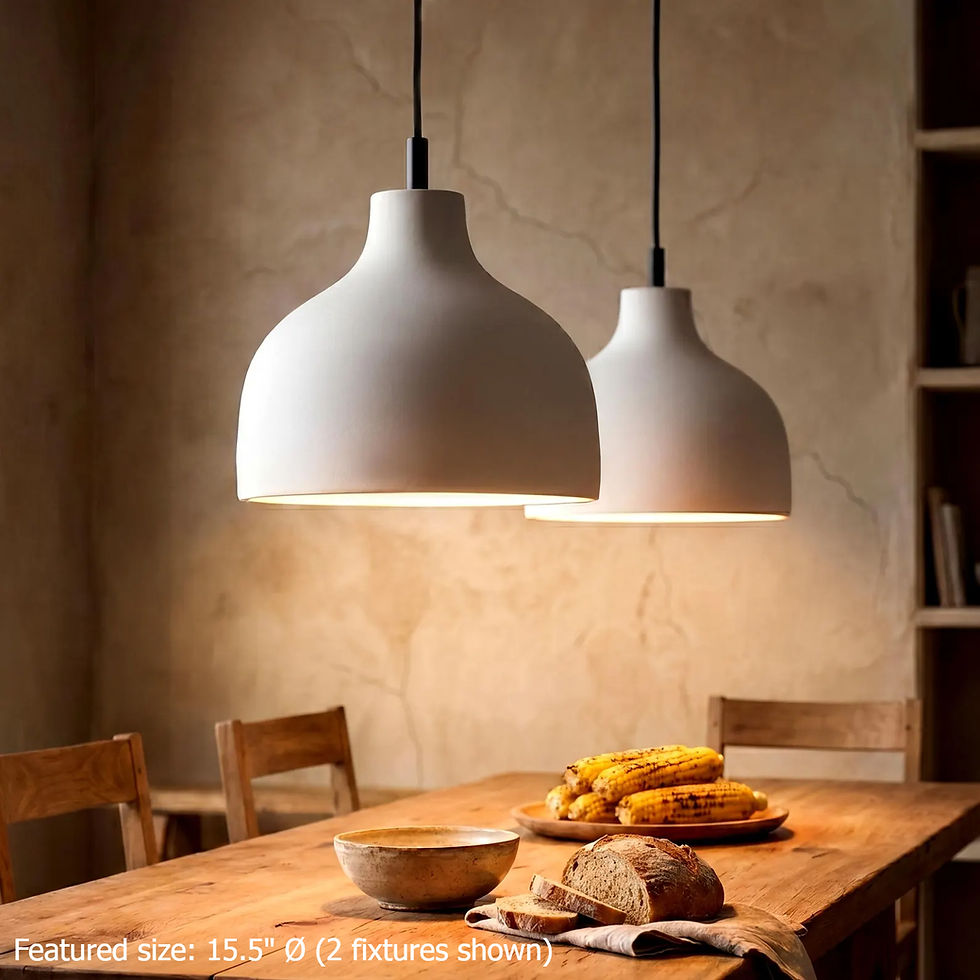
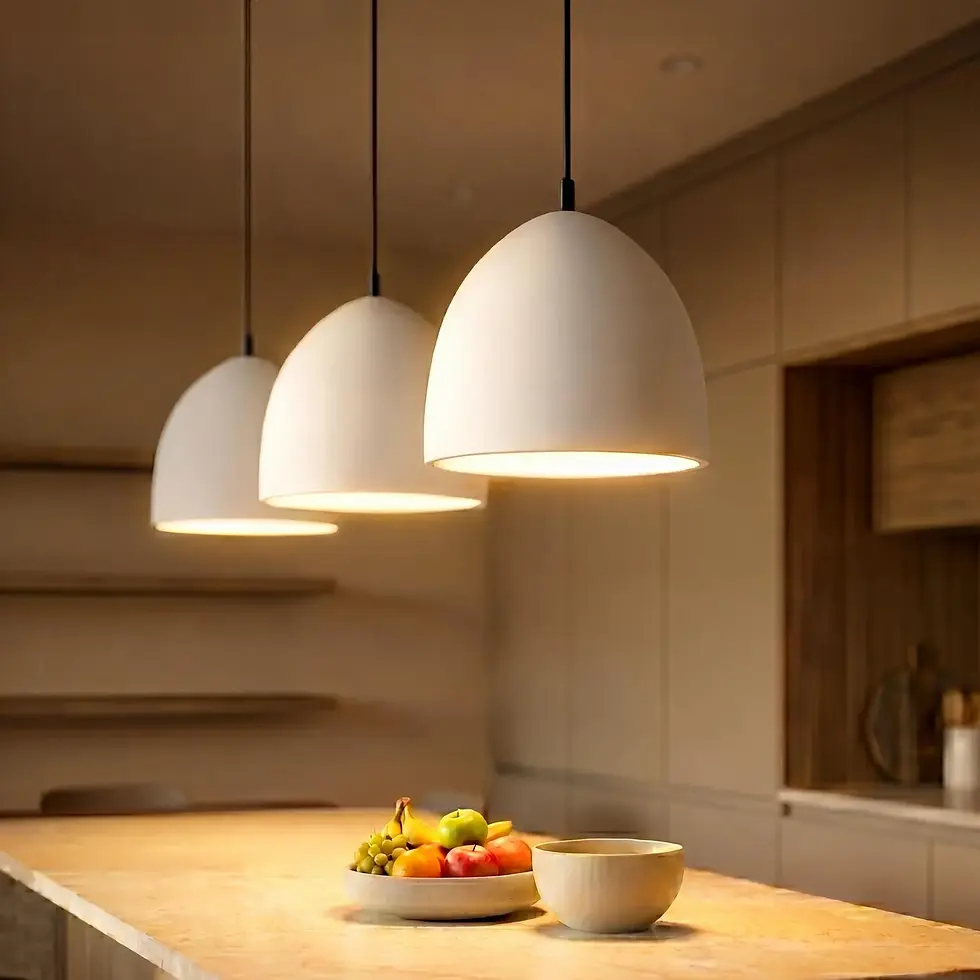
Choosing the right pendant comes down to scale, spacing, and purpose. Size the fixture to the space below it, roughly two-thirds the width of an island or table section, so it neither disappears nor overwhelms. Multiple pendants need enough breathing room between them to avoid feeling cluttered, longer counters generally suit a spaced linear run rather than one oversized piece. Kitchen islands benefit from open, task-focused shades, while dining rooms often call for softer, dimmable light. See our height and finish guides below for the rest.
Ceramic & Terracotta Pendant Lights: Choosing Your Finish
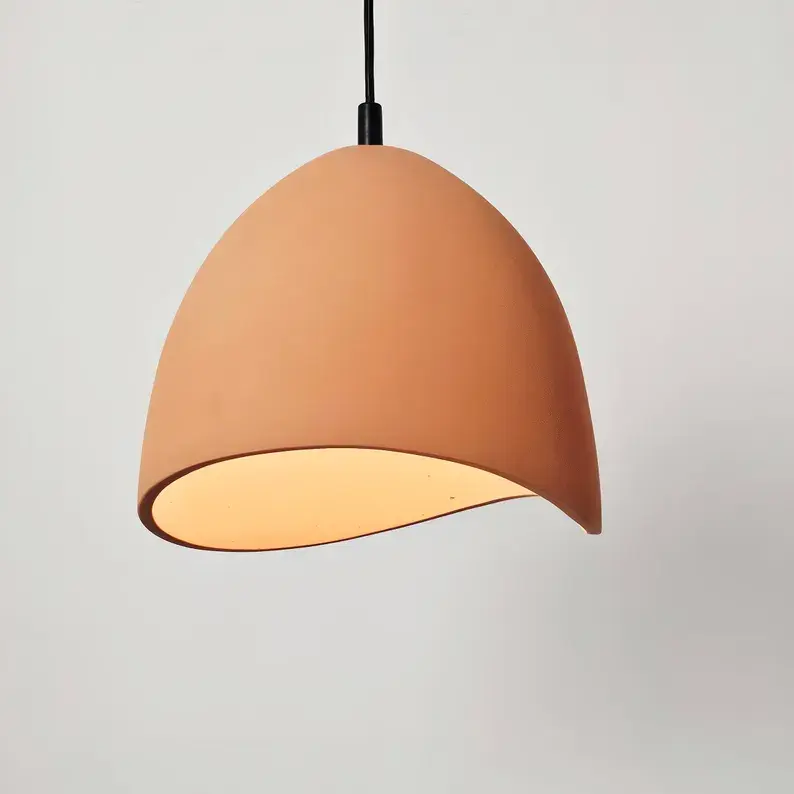
Ceramic and terracotta pendants are the only category where the shade material doubles as the design statement, unlike metal's commercial edge or glass's cool, light-scattering neutrality. Terracotta casts a warm amber glow suited to wood, stone, linen, and concrete interiors, especially over dining tables and kitchen islands. White clay gives a softer, cooler light suited to contemporary and Scandinavian spaces, reading as warm plaster rather than clinical white. Both come in 15 additional colours across every pendant form and size.
Wabi-Sabi Pendant Lights: What Makes Them Different
Wabi-sabi pendant lights are defined by imperfect organic forms, visible hand-throwing marks, and a deliberate rejection of the uniform finish typical of manufactured lighting. Each piece is hand-thrown on a pottery wheel, so no two are identical, surface variations in clay tone and texture are part of the object's value, not flaws. Over a kitchen island or dining table, a wabi-sabi pendant reads as a considered, singular choice rather than a standard fitting. Available in terracotta, natural clay, and white, compatible with standard LED bulbs
Ceramic and terracotta pendants are the only category where the shade material doubles as the design statement, unlike metal's commercial edge or glass's cool, light-scattering neutrality. Terracotta casts a warm amber glow suited to wood, stone, linen, and concrete interiors, especially over dining tables and kitchen islands. White clay gives a softer, cooler light suited to contemporary and Scandinavian spaces, reading as warm plaster rather than clinical white. Both come in fifteen additional colours across every pendant form and size.
